


2025 Nobel Prize Core Interpretation: Deciphering The Mechanism Of Immune Self-Non-Aggression, A Breakthrough Point For Autoimmune Diseases
Jan 22, 2026
Leave a message
Core of the Nobel Prize: Identifying the "Security Force" and Its "Commander" of the Immune System
The immune system is an intricate marvel of checks and balances. It can mount a robust defense against infections while, in the vast majority of cases, avoiding damage to the body's own tissues. How is this crucial balance maintained? The core contribution of this year's Nobel Prize lies precisely in uncovering the key mechanism underpinning this balance.
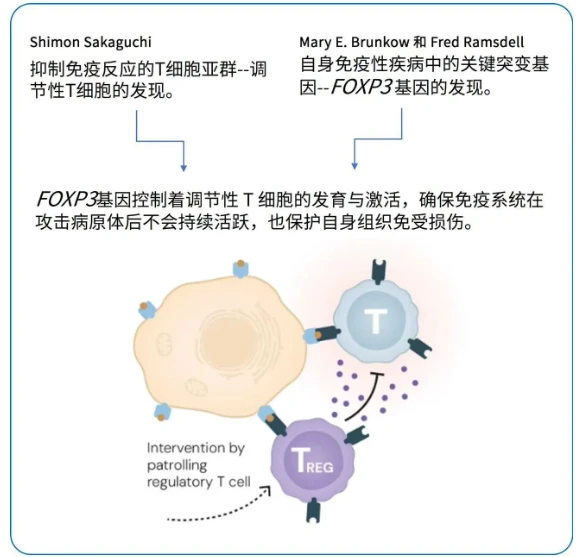
Discovering the "Security Force"Shimon Sakaguchi identified a specialized subset of T cells-regulatory T cells-which, far from triggering immune responses, suppress them and prevent the onset of autoimmune diseases.
Locating the "Commander"Mary Brunkow and Fred Ramsdell pinpointed a key gene responsible for severe autoimmune disorders-the FOXP3 gene.
Unraveling the "Command Chain"Subsequently, Shimon Sakaguchi and other researchers discovered that the FOXP3 gene acts as the commander governing the development of regulatory T cells. These cells then secrete inhibitory cytokines and adopt other approaches to prevent other T cells from mistakenly attacking the body's own cells, while also ensuring that the immune system can calm down from its high-efficiency operational state after eliminating invading pathogens.
www.nobelprize.org
What is Peripheral Immune Tolerance?
One of the marvels of the immune system is its ability to recognize pathogens and distinguish them from the body's own cells, a function that relies heavily on immune tolerance.
Immune tolerance refers to a state of immune unresponsiveness of the immune system to specific antigens, which is divided into central immune tolerance and peripheral immune tolerance.
Central Immune Tolerance
It is a type of immune tolerance that occurs in central immune organs (such as the thymus and bone marrow). It eliminates developing immune cells that react to self-antigens, thereby eradicating T cells and B cells that would attack the body's own cells at the source. However, central immune tolerance is a rigorous yet imperfect process-there will always be some "escaped cells". Moreover, the immune system also needs to cope with newly emerged self-antigens. How to address these issues? Peripheral immune tolerance is required for continuous monitoring and control.
Peripheral Immune Tolerance
It refers to a state of immune tolerance established by the immune system to self-antigens in peripheral tissues of the body (such as lymph nodes, spleen, and peripheral blood) outside the central immune organs. It continuously monitors and suppresses potential erroneous attacks, and this year's Nobel Prize falls into this category.
Immunotherapy Strategies: From "Confrontation" to "Balance"
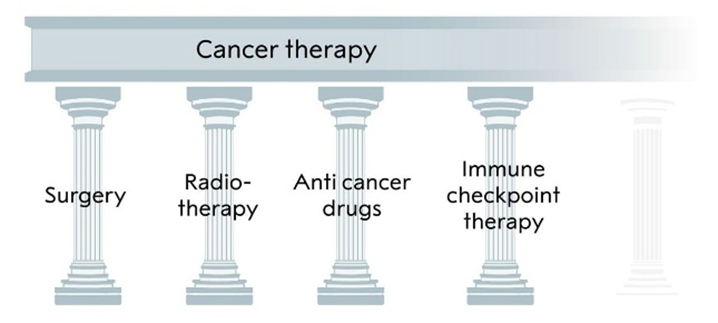
When it comes to immune suppression, the 2018 Nobel Prize has already revealed a key component: immune checkpoints (such as CTLA-4 and PD-1). Acting as molecular "brakes" on T cells, they can prevent excessive immune activation and protect the body's own tissues. However, cancer cells also exploit this mechanism-by expressing corresponding ligands (such as PD-L1) to "step on the brakes" and achieve immune escape. Based on this discovery, scientists have developed immune checkpoint inhibitors, which "release the brakes" via antibodies to reactivate T cells' attack on cancer cells, such as Pembrolizumab (Keytruda) and Nivolumab (Opdivo). This strategy has revolutionized cancer treatment and has become the "fourth pillar of anti-cancer therapy" following surgery, radiotherapy, and chemotherapy.
www.nobelprize.org
If immune checkpoints are the "brakes", then the regulatory T cells, which won the 2025 Nobel Prize, are a dedicated "security force". Their significance extends far beyond cancer treatment, and we are expected to reshape immune homeostasis from the root cause.

For cancer treatment, the activity of immune cells in killing tumor cells can be enhanced by locally eliminating or suppressing regulatory T cells. For autoimmune diseases and organ transplantation, on the other hand, regulatory T cells can be expanded or supplemented to actively quell erroneous immune attacks or protect transplanted organs.
Particularly in the field of autoimmune diseases-a sector with immense market potential where multiple monoclonal antibody drugs have already achieved multi-billion-dollar sales-current therapies face limitations. Autoimmune diseases typically involve multiple signaling pathways, making it difficult for single-target drugs to deliver optimal efficacy. The regulatory mechanism of regulatory T cells uncovered by this year's Nobel Prize, however, provides a novel approach to restoring immune homeostasis from a more systematic perspective, and opens up groundbreaking avenues for disease treatment.
Whether it is the precision intervention of "releasing the brakes" in 2018 or the systematic regulation of the "security force" this year, these breakthroughs indicate that our immunotherapy strategies are no longer confined to simple "confrontation". Instead, they are shifting toward the goal of "balance", i.e., harnessing the innate intelligence of the immune system itself for therapeutic purposes.
From Scientific Breakthrough to Industrial Support: The Key Role of Cell Culture Media
The realization of these cutting-edge therapies-whether it is the large-scale production of antibodies or the in vitro expansion and modification of immune cells-ultimately hinges on a core foundation: a safe, efficient and stable cell culture system.
Traditional serum-containing culture methods have become unable to meet the industrial production needs of cell therapy products, due to limitations such as restricted human serum supply, significant batch-to-batch variation, undefined components and high contamination risks.
The HIPP series is a portfolio of serum-free culture media products specially developed by BioEngine for immune cell culture. It can support the efficient expansion of immune cells under completely serum-free conditions while maintaining excellent cellular viability and functional indicators. At present, the HIPP series products have successfully supported multiple cell therapy projects to enter the clinical stage, making them an ideal choice for the cell therapy field spanning from research and development to commercial production.
