


As Norovirus Runs Rampant, How Does Serum-Free Medium Become A Secret Weapon For Vaccine Production?
Jan 27, 2026
Leave a message
Norovirus Draws Growing Attention
Norovirus ranks among the major culprits of acute gastroenteritis worldwide, and its impact should not be underestimated. Globally, it causes approximately 699 million cases and 219,000 deaths each year. In China, norovirus outbreaks occur annually, with the infection rate among children under 5 years old reaching as high as 15.6%.
At present, there are no specific drugs or treatments for norovirus, making vaccine development a key priority for prevention and control. In vaccine production, cell culture is a critical step, and the application of serum-free medium provides an important guarantee for the safe and efficient manufacturing of vaccines.
Norovirus Vaccines
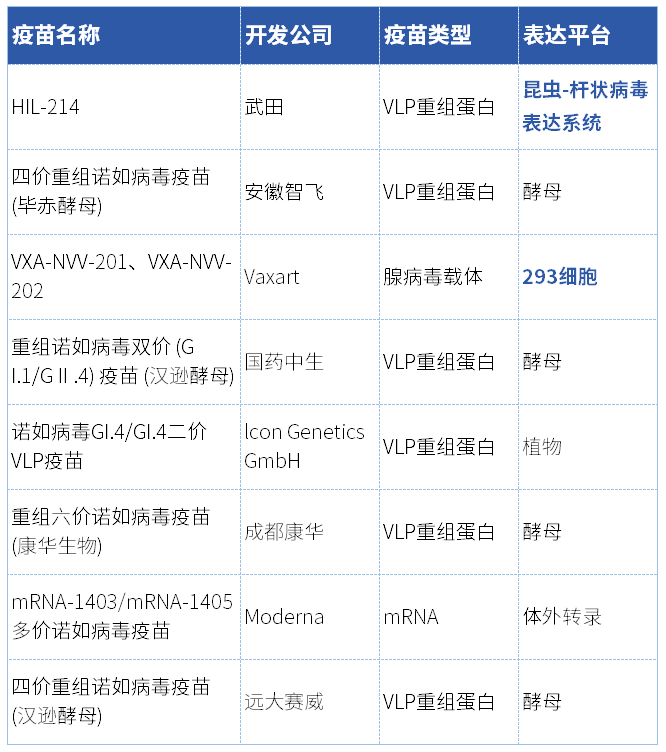
Currently, 8 norovirus vaccine candidates are in clinical stages worldwide. Among them, 6 are recombinant protein vaccines (VLP vaccines), 1 is an adenovirus-vectored vaccine, and 1 is an mRNA vaccine. The production platforms include yeast, insect-baculovirus expression system, 293 cells, and in vitro transcription (as shown in the table below).
Recombinant Protein Vaccines
Why are norovirus vaccines dominated by recombinant protein vaccines instead of the commonly used live attenuated vaccines or inactivated vaccines? This is mainly because norovirus cannot grow efficiently in cultured cells, making the traditional live attenuated or inactivated vaccine approaches unfeasible. In addition, recombinant protein vaccines boast unique advantages.
Recombinant protein vaccines do not contain complete pathogens, but only one or several antigenic proteins capable of inducing an immune response. As non-replicating vaccines free of infectious components, they are more suitable for immunocompromised populations. They also feature high safety, good stability, and ease of production. Previously, we used HPV vaccines as an example to introduce recombinant protein vaccine production platforms and the characteristics of different platforms. For details, please refer to our in-depth article: Billion-Dollar Vaccine Market: Application and Comparison of Different Expression Platforms in HPV Vaccine Production.
VLP vaccines are a special type of recombinant protein vaccine, usually composed of pathogen structural proteins (commonly viral capsid proteins). These proteins self-assemble into virus-like particle structures without containing viral genetic material, thus posing no infectivity risk. Structurally mimicking real viruses, VLP vaccines can more effectively stimulate the immune system while ensuring safety. VLP production platforms include E. coli, yeast, insect cell platforms, mammalian cell platforms (e.g., HEK293, CHO cells), and plant platforms. The norovirus vaccines discussed in this article, for instance, utilize yeast, insect cell, and plant platforms.
Adenovirus-Vectored Vaccines
Besides the recombinant protein technology platform, the adenovirus-vectored technology platform is also employed in the norovirus vaccine pipeline. Adenovirus vectors themselves possess viral properties, enabling efficient infection of various cell types. Subsequently, the antigen genes carried by the vectors are expressed inside the cells, triggering an immune response. Adenovirus-vectored vaccines typically use the HEK293 cell platform.
Serum-Free Cell Culture Processes Facilitate Vaccine Production
Cell culture is a critical step for both recombinant protein vaccines and adenovirus-vectored vaccines. Compared with the traditional serum-dependent adherent cell culture process, the serum-free culture process offers distinct advantages. It eliminates potential risks associated with serum, enhances the efficiency and safety of cell culture, and the suspension serum-free culture process is more scalable, providing a reliable guarantee for large-scale vaccine production.
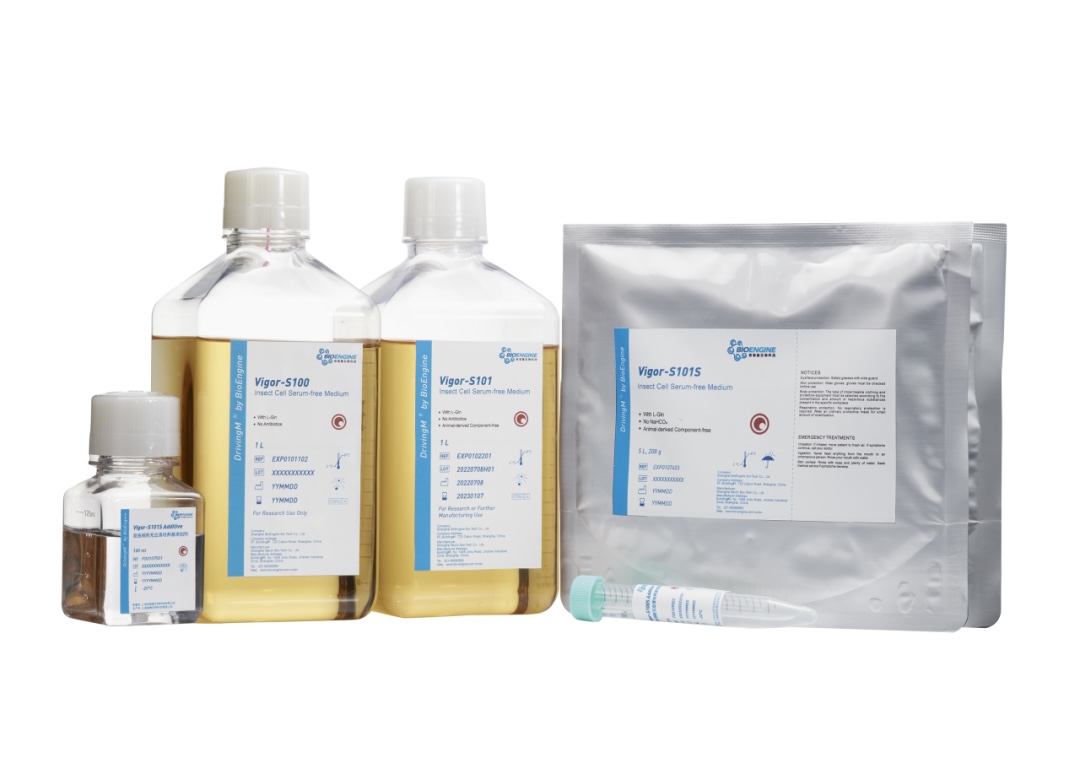
BioEngine has long been dedicated to providing high-efficiency, high-quality serum-free cell culture medium products for enterprises in the antibody, vaccine, and CGT (Cell and Gene Therapy) sectors. Our extensive product range basically covers all types of animal cells used in the biopharmaceutical field, such as the insect cells, CHO cells, and HEK293 cells mentioned in this article.
Vigor Series Serum-Free Medium for Insect Cells
An ideal choice for high-density suspension culture of insect cells and high-yield production of recombinant protein vaccines.
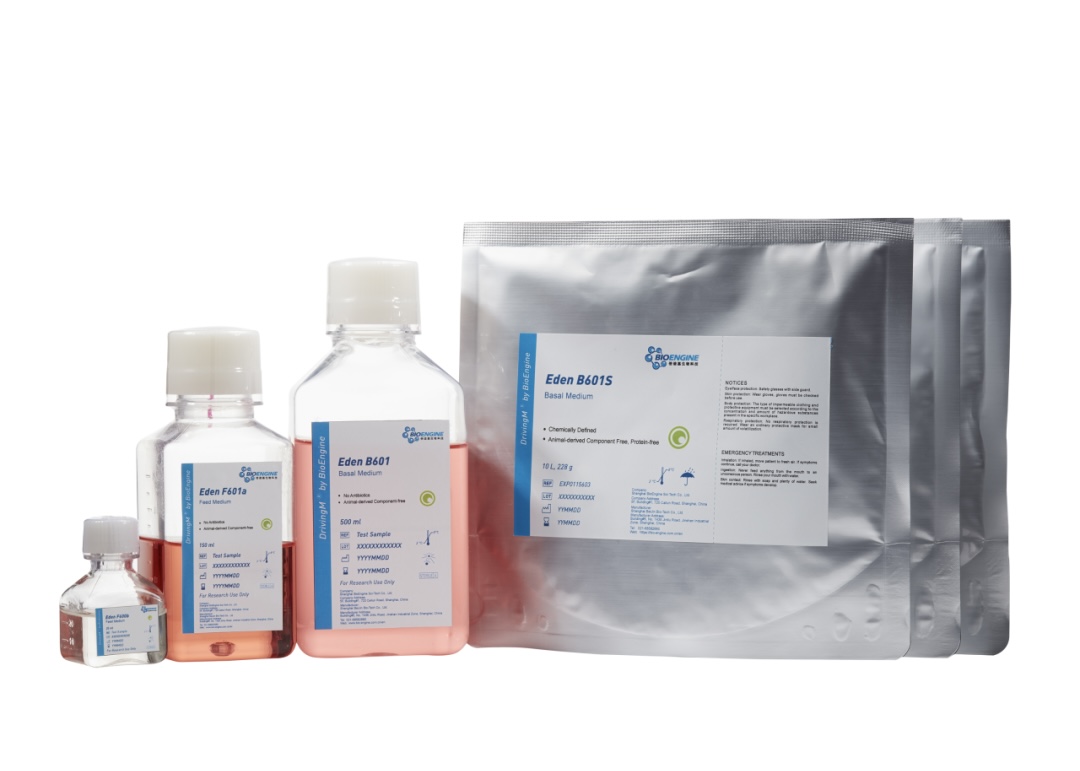
Eden and EasZN Series CD Media for CHO Cells
With proven success in the commercial production of antibody drugs, these media also deliver outstanding performance in the vaccine field.
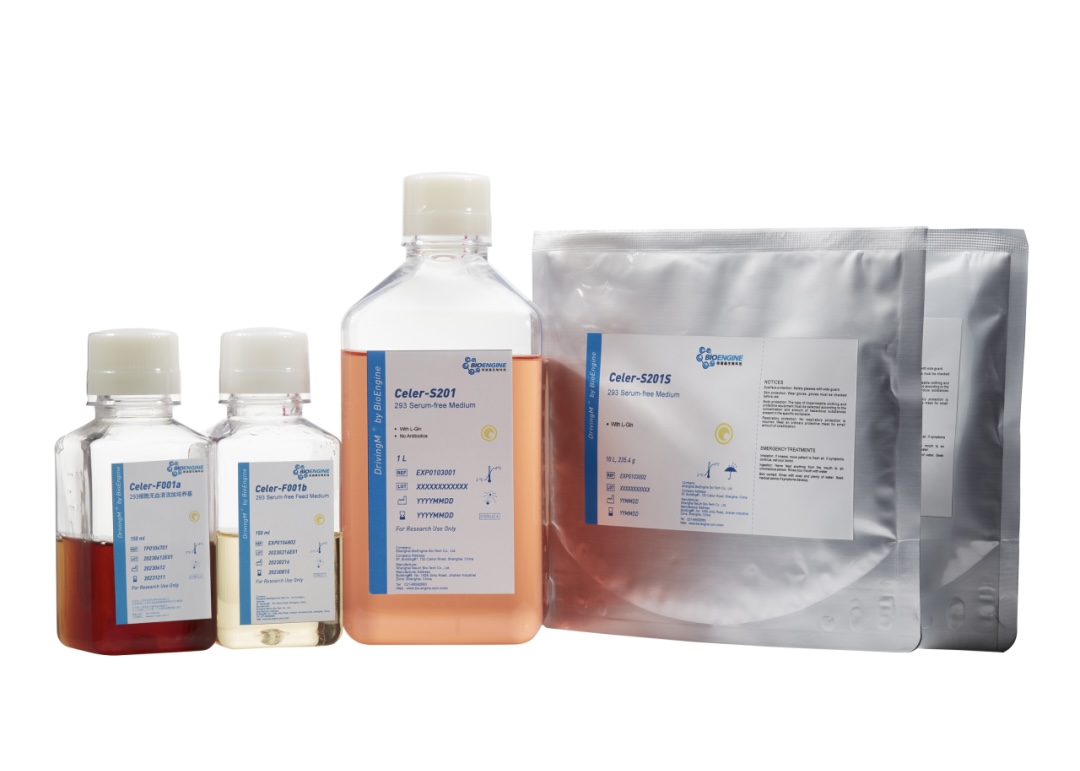
Celer-S201 Serum-Free Medium for 293 Cells
Specifically designed for protein expression in 293 cells, it supports large-scale production.
Celer-S001 Serum-Free Medium for HEK293 Cells
Specifically designed for adenovirus vector amplification, it facilitates the high-efficiency production of adenovirus-vectored vaccines.
